Office Hours
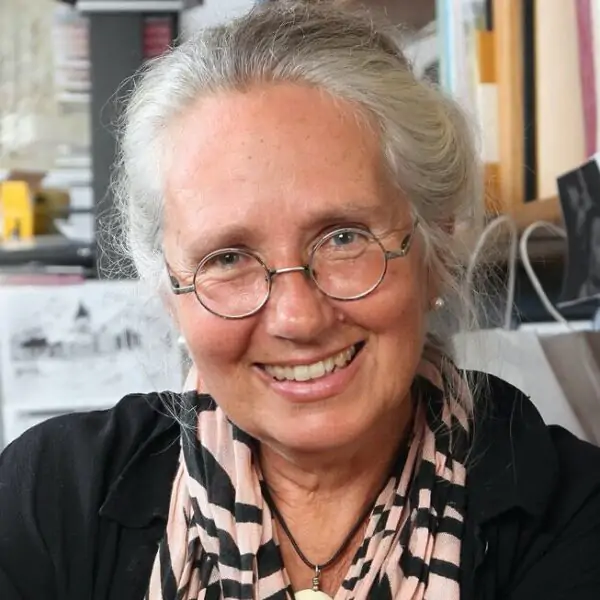
David Hsu sits down with physician and historian Dr. Jacalyn Duffin to catch up about life, medical humanities and MedHum.
DAVID HSU: What do you think is the importance of medical humanities to you at this point?
JACKIE DUFFIN: I think it is a very satisfying way of filling in the gaps that are generated by traditional medical training and medical experience. It invites reflection, and it invites growth, and it especially encourages criticism. And those things were certainly not there in my training. Therefore, it is comforting and inspiring, both of those things for me.
When you say it that way, there’s a certain subversive quality to medical humanities. Am I catching your answer right?
Yes, I guess that is exactly right. Subversiveness goes with the territory of what we do as historians as well. Everyone thinks that history is about the past, but the questions that we ask of the past are generated by the present and also the inherited wisdom that we have. And there has to be curiosity and a willingness to admit that the trajectory might not have been as straightforward as is sometimes pretended.
How do you respond to the saying that basically history is written by the victors?
That statement is also a reminder that what might be out there as the master narrative isn’t exactly the truth or isn’t exactly the whole story. And the losers will have their own story. And sometimes that’s worth exploring. Of course, my view of medical humanities is very much affected by the fact that I am a historian. And more than any other aspect of medical humanities … that’s what interests me the most. In fact, I don’t mind admitting that the medical humanities boom that we’ve witnessed in the last decade and a half or so has been a wonderful vehicle for enhancing the presence of history in medical schools, and our visibility. I’m happy to hitch my wagon to it, but I don’t claim any expertise in all the other disciplines that participate.
One of the things I think is useful for history with respect to present and future doctors is how history is a mirror image of the clinical process and the scientific process. And that’s something that I raised with my students all the time when I was teaching, that you begin with a question. As medical practitioners, you also have a question; it is the chief complaint of the patient. What is wrong with me? Why do I feel this way? And as a doctor, you consult the patient, you explore the history, you do the physical examination, and then you touch base with the clinical wisdom that’s available to you through the medical literature. And you come up with a diagnosis, which determines the direction of action. As a historian, you have the question: where did this come from? Or why do we do this? Or what happened then? And with your question, you interrogate the past, looking at all of what has already been published, which is the equivalent of the medical literature, but also looking at things that have been ignored, like the stories of the losers, for example. And you come up with an interpretation. And that is a direct parallel with the process of diagnosis. You can push this even further to make an analogy with a scientific experiment where you have the hypothesis, the method, et cetera, and you come up with a conclusion. I think that demonstrating history as a discipline to healthcare professionals opens up their imaginations to seeing the practice of what they do is something that’s malleable, that’s anchored in time, that’s affected by culture and society. So, my role in the medical school was to do that. It was a privileged position. But I had no idea how successful I ever was. I have a sneaky suspicion that a lot of my faculty colleagues and maybe a large number of the students just thought I was there for comic relief and entertaining stories to be told in the meantime. That’s okay. I accept that if that gave me permission to weasel my way into the curriculum or introduce new ideas.
Tell me a little bit about this medical humanities boom over the last 15 years. What’s going on?
As you know, medical schools are evaluated. They’re accredited by committees. And things come along that are the flavor of the month. Prior to the medical humanities boom, there was an ethics boom. Many medical schools didn’t have ethics, but they looked around and they thought, oh, we better get ethics because everyone has ethics. If they got ethics, it made them look ethical. That happened in the 90s. I saw that as a real problem for people teaching history of medicine. I got along great with our ethicist at Queen’s. It wasn’t her fault, but she was my biggest enemy. Because if the school had to devote some time to what they called “soft science,” they would rather have the ethicist than the historian because the ethicist got them brownie points on the accreditation.
There was a time when the American Association for the History of Medicine was meeting in Chicago in May 2014. And we happened to be meeting at the same time as the Academy for Professionalism in Healthcare. So the brass of the American Association asked to have a meeting with their leaders to find out how they managed to convince all the medical schools they needed ethics and in particular succeeded in having questions about ethics education in the exit surveys. They did not really understand our problem. I think ethics had the media going for it and the power of a number of high-profile malpractice cases that had come along. It became obvious that patients wanted to make sure their doctors were legal and ethical, and the schools wanted to give the students tools to address these concepts. It became almost urgent.
In fact, I did some Medline searches on this at the time. The number of articles addressing history of medicine basically tanked. And the number of articles addressing medical ethics soared. There was always an interest in medical ethics. It goes way back. Hippocrates even talks about this. And then there was codification in the 18th century. But what arose in the late 20th century was this concern that it should be transferred to the students as some kind of rubric that would help them in their future to educate them and help them behave ethically. And then that sort of plateaued and along came medical humanities.
Accreditation saw this as very good for student life. They saw it as very good for student education. If you could enhance the possibility of getting a positive accreditation of your medical school, then you would acknowledge that you should have something called medical humanities. But under that umbrella, there could be just about anything. And that’s the problem with it as a discipline. It doesn’t really have a single method. It embraces so many other sorts of fields. That’s the beauty of it, but it’s also the confusion of it when it tries to make its way in a curriculum that is as rigid as a medical school structure.
In Canada we now have a society for Medical Humanities, the Canadian Association for Health Humanities. I’ve attended some of the meetings but the disappointing thing about it from my perspective is there’s almost never anything about history.
I’m curious. If history is not emphasized as part of medical humanities what is?
Presumably it’s ethics again and reactions to technology. I think ethics underpins a lot of it, but medical ethics is a very distinct discipline, as is history. We’re not the same thing. We respect each other but we’re very different. So medical humanities usually include, at the Canadian meetings at least, a lot of literature, of readings, both fiction and nonfiction. It includes the arts, music, poetry, visual imagery, trauma, drama, dance, etc. And often the papers in the meetings that I’ve attended are almost all about individual case studies: e.g, “We tried this at our medical school; and then we did an after-survey about whether it worked or not. Of course, our students loved it because it was fascinating, and it wasn’t memorizing the elements in the periodic table. It was something that took them out of themselves.” Often medical students have other hobbies before they get to medical school, which are sadly neglected because there’s no time for anything else. And these activities provide an outlet for them to recover their previous selves and their identity.
I think another agenda of Medical Humanities is to raise awareness of the differences between peoples — the difference between your patients, for example, and yourself, and to be prepared to tolerate it. So that’s a subliminal message of many of these things, causing you to see the world and other people in a different and more tolerant way. That’s basically what goes on in the medical humanities conferences. People get very excited about these opportunities, a drama presentation, a collective reading, something that they might have done together, or artwork that medical students do based on their clinical learning and then having a show about it. That kind of thing gets reported. And then … it sort of sinks into an oblivion until the next meeting comes along.
So it sounds like the way you’re describing it, there’s a little bit of the study of history of medicine versus medical humanities. The two are not fully in sync in your mind.
No, they’re not fully in sync in my mind, but I accept and welcome history being seen as part of medical humanities. I think it’s an opportunity for us as historians to maintain our place and our credibility in medical schools.
The presence of history in medical education has gone up and down over the centuries. There have been full-fledged chairs in History of Medicine. In a distant past, they went away and they came back. What is expected of it has probably also changed through time. But now, since it seems medical humanities is an easier way to open the door to medical schools, history can be part of it. I don’t know. It would be really interesting to find out if ethicists feel the same way as I do about it. I find that some medical humanities programs are peopled by or run by doctors who are so well-intentioned– very, very well-intentioned– but they really don’t have any expertise in anything but medicine. The best of them, obviously, are experienced clinicians who’ve had a lot of encounters and are thoughtful and reflective about those encounters. But there’s no method. It’s not a single discipline. It’s a quilt with a whole bunch of different patches in it.
What do you think about medical humanities and maybe more specifically the history of medicine as a vehicle for the broader mass of people out there?
I’ve written 11 books and the most recent one to get published is this one. [She holds up a copy of Covid-19: A History]. What I was doing was getting it down for everyone. It’s a history for everyone. It’s not aimed at medical students or doctors or anybody in particular. It’s aimed at Canadians basically, but it talks about the whole pandemic from a global perspective. What I want to do is remind people of the personal stories that go with the pandemic, about the dilemmas of decision-making and policy choices, about the scientific endeavors that are so easy to mock or make fun of. And clearly, I’m revealing my colors. I believe in vaccines. I believed in the public health measures. I point out in this book about the value of quarantine. When you don’t know what the pathogen is and you haven’t got a clue what the incubation time is because it’s a previously unknown pathogen, quarantine is not a stupid thing to do, because you are waiting to find out how dangerous it might be and put some parameters around it. I think– and again, I’m speaking only from a history perspective, not medical humanities in general– I think it was important to unpack what was behind those decisions that many people got so angry about. And yet they were lifesaving decisions in many cases. Sometimes perhaps it was over the top, but it was because we didn’t know what we were confronting.
During that book writing, I served as a volunteer contact tracer at the Kingston [Ontario] Public Health Unit. I had to phone up citizens all over our area and get them to quarantine because they’d been in contact with someone who had COVID. That was very eye-opening for me because I realized at what level you had to pitch why it was a good thing to do. And at the outset, when we didn’t know what the parameters were, we were telling people who’d been exposed to COVID to stay home for 14 days. Kingston was the only health unit to use volunteer contact tracers, but we worked really hard and Kingston had the best outcomes of COVID cases in the country for a brief time. It didn’t last forever, but it was like a flagrant, on-the-spot demonstration of something that has been known for years, since at least 14th-century plague.
What do you make of that now that we’re in 2025 and people are so over this stuff now, that there’s this feeling I get that people are saying we will never go into quarantine again?
That’s why I wrote the book. Actually, I was invited to write it, and I had to think about whether I wanted to or not. One of the reasons I decided to write about it was that my thesis advisor, Mirko Grmek, wrote a history of AIDS right at the beginning of the pandemic. And I thought, well, I can’t write a history of COVID because it isn’t over and it may never be over. We may always have COVID. And then I remembered that Grmek had written that history of AIDS at the beginning of the AIDS epidemic. He set down where it came from. He studied the historical possibilities. He had the science too. I realized he was at the end of his life, and I’m at the end of my life. And I thought, OK, maybe this is what I need to do, to accept the task of writing it as it is, right now. Now I’m very depressed by these negative attitudes. But I do hope that when the next pandemic comes--and there will be another pandemic, with a new pathogen that we haven’t seen before, and there will be conspiracy theories about where it came from– I hope that the public health agencies will remember that quarantine from 14th-century plague worked really well, and that’s what we need to do again if we don’t want to overwhelm our finite resources in hospitals and health care units to look after people. The more you implement those measures, the fewer people die. It makes a huge difference, and you can actually see it. So the story is there. Whether or not it will be believed, whether or not the argument can convince the naysayers, I have no idea. All I did was set it down and hope.
You have a historian hat, which is the critical, sometimes subversive side and then you also have the medical doctor establishment side, the scientific side. It gives you a unique lens to look at the COVID pandemic and the consequences that came afterwards.
It’s been the story of my life. I worked in cancer care at the end of my career at Queen’s and patients would tell me really interesting things. I loved talking to them and hearing what they thought about what was going on. And some of them held what I would think of as wacky ideas or they’d utter doctor-blaming ideas. Then the doctor in me would feel very defensive about their accusations of the mistakes or the neglect of my colleagues, even colleagues I’d never met. But when it comes to the history of medicine, I feel terribly responsible for the bad things that doctors may have done, even if it was not deliberate, but out of ignorance, because they didn’t know what was going to be discovered next; or due to misplaced enthusiasm for something that turned out not to be as great as everybody thought it would be. And I’ve seen that with respect to certain drugs in my career. I’m old enough to remember thalidomide babies; I was a child when that happened. But the impact of it was enormous: what pills could do to us and how they might harm us. There’s a new biography out that I reviewed for Medhum of Francis Kelsey, the Canadian-born American health official who spared the United States from the damages of thalidomide. An amazing and courageous decision because there was great pressure on her to approve the drug and she didn’t. So we had the tragedy in Canada and they didn’t in the United States, which was fascinating for me to learn at this stage of my life, because I remember being so horrified and thinking, how could doctors let us down?
There are also other procedures that were once considered important to do that we have done away with, not because they shouldn’t ever have been used, but because something so much better came along. The most striking example of that that I remember are pneumoencephalograms. Pre-CT scans, if you thought there might be a space-occupying lesion in the brain, you put the patient under a sort of an anesthetic. You took out a modicum of CSF and injected the same volume of air. And then you strapped them to a chair and you rotated them around, taking x-rays while the bubble of air moved all around the brain to see if there was a space-occupying lesion. It was brutal, painful, but it was the only way to find out if there was a space-occupying lesion in there. And of course, you could tell only if it was bulging on the surface of the brain. It took days for patients to recover with headache and vomiting. Every medical student in my class of 1974 was required to go and witness one of these so that we would not order it frivolously. And in that same year, CAT scans were introduced and nobody would ever do a pneumoencephalogram again. Ever, ever, ever. But does that mean that all the doctors who were involved in ordering pneumoencephalograms or taking the x-rays were evildoers? I don’t think so. They were trying to help. They were trying to make a diagnosis. But it was excruciating.
If you could fix medical education and its relationship to history, what would you want done?
I’ve written about this for a long time. I was so lucky at Queen’s; I really was. They let me get away with a lot. From my hire in 1988 until I retired, I thought the best way to bring history into medical education was to infiltrate it. The historian has to be very tolerant and very flexible. But what you do is you introduce the history of whatever it is they’re studying at any given time. History of anatomy in anatomy if they’re doing the anatomy course. History of physiology in physiology. History of pathology (essentially is the history of disease) in pathology. The timing really is everything because it’s synergistic with what they’re learning at the same time.
With that method, you are preceded by a guy in a white coat, and you’re followed by a guy in a white coat. It gives you credibility vicariously by the people who are around you. But it makes it seem relevant in a way that otherwise it wouldn’t be. If you make it an optional, elective course, the students automatically know that it’s not important. So, I refused to teach electives when I got hired at Queens, which meant that I had to meet every department head to beg for time to do a history session. There were 25 departments at the time, and only three said yes. They were– anatomy, pathology, and obstetrics; I’m forever grateful.
Early on, faculty members of those departments would come to my inaugural class on the history of their discipline. I think they were slightly checking out how “nice” I would be to their field: the history of obstetrics, for example. But they approved the approach. The most willing departments were those units in the medical school with a lot of curriculum hours, so they were able to feel generous. “We will give her an hour.”
But one department head said to me, “I can’t do that. History, I love history. You’d be invited to give an after-dinner speech at our annual meeting. That would be really good. But we only have 80 hours in the curriculum. And if I gave you one of those hours, they might miss something important and kill somebody.”
I said, “Oh, thank you,” and I went back to my office feeling rejected. Only later did I think of the right reply, “If you don’t give me one of your 80 hours to make them skeptical about everything else you’re going to teach them in the other 79 hours, then they really might kill somebody.” That was the answer I should have said.
It’s about the time constraint; you can’t offer an entire course. Medical students are not going to be historians. They’re going to be doctors. So what you want to do is sensitize them to the fact that what they see as knowledge now is something that has evolved through time, through human endeavor, something that is destined to change in the future. So history is a reminder of life-long learning. And if you time it right, then it is relevant and interesting. Not all students are going to like it, but they don’t all like pharmacology either.
And the other thing that the medical school let me do, bless their hearts, is to grant my wish for one question on every exam.
I remember this actually.
It was a question of credibility; a way of forcing the medical school to commit to the idea that history was important.
All right. To wrap up, we’ll get back to Medhum. what would you like to see us do in the months and years to come?
I’m really a special interest voter on this because I was for 25 years involved with the Literature Arts and Medicine Database. And I contributed hundreds of annotations to that database. I hope MedHum is a place where people who want to use literature–mostly literature is what I think of, but there are other things there, for example film reviews–in a way that will deepen their understanding of a situation, or for enhancing education, or for whatever purpose, because that’s how the database was used, that it will be there, accessible to people who want those things.
So for me, I get to go there when I feel like it. I get to browse. I get to pick around. I already knew some of the people and from our meetings, I’ve gotten to know new ones. I think you, people of your vintage, should be deciding its purpose, in terms of determining the direction and the flavor of this entity, which hopefully will have a big reach and get to the people who need to see it. You have a better sense. You’re closer to the users. I’m not trying to be gloomy about it. I just know that it’s entirely possible that it needs to go someplace that I can’t even imagine.
Dr. Jacalyn Duffin was the Hannah Chair of the History of Medicine at Queen’s University from 1988 to 2017. She was also a practising hematologist. In 2020, she was awarded the Order of Canada.
More importantly, she’s one of my favorite people in the world. Medical school wouldn’t have been the same without her gentle encouragement and unending enthusiasm. Dr. Duffin, thanks for everything.
Web image by Medhum.org