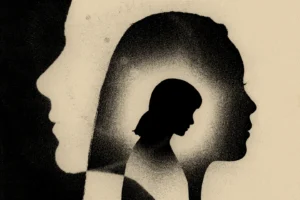
On March 7, 2026, the College of Physicians of Philadelphia will present a reading of the play The Excellent Doctor Blackwell by Margo Weishar. (The event is open to the public with details available at https://collegeofphysicians.org/events/excellent-dr-blackwell)
Dr. Margo Weishar is a physician–playwright determined to tell the story behind the story, the private, often invisible lives of women who moved ahead of their time. After a long career in medicine, Weishar earned a graduate degree in theatre at Villanova University, turning to writing to pursue the questions that stayed with her: the cost of ambition, the tension between purpose and desire, the truths history smooths away.
The Excellent Doctor Blackwell reimagines the iconic pioneer, Elizabeth Blackwell, not as a portrait in a museum, but as a brilliant, conflicted woman wrestling with legacy, love, and the limits of her own ambition. Set against the sun-drenched backdrop of 1876 Italy, the play intertwines past and present as a young student and a watchful daughter stir up questions that Blackwell has spent a lifetime avoiding. This time-bending drama reveals the private struggles behind public triumphs and asks what any of us are willing to sacrifice to change the world.
In advance of the event, Guy Glass has had the opportunity to speak with Margo Weishar about her play:
Guy:
Hello Margo. It is such a pleasure to speak with you. For anyone who may be deciding if they want to come to the reading, can you tell us a bit about the play and the subject matter? And about how you became interested in writing about Elizabeth Blackwell.

Margo:
What really interests me is people who break out of the norm.
People who do things that are completely extraordinary, and what motivates them to do that, and what is their personal cost in doing that.
Elizabeth Blackwell became the first woman to graduate from medical school in the United States, and then she had a career in promoting women in medicine. But I also wanted to show her as a human being. The only pictures we have are of an old woman, but she was a vital, curious, intelligent, daring, brave person who fought against incredible odds to get where she was. And so that’s who I really wanted to investigate. You know, we all rely on these pioneers to break barriers down so that people like me can walk through them. But what does it take from them to do that? What are the choices they had to make in your own lives to make that possible? So that was the question that really ended up fascinating me.
I got a theater degree because it was something I’ve always done in my life, and I decided I really wanted to formally go and learn. And when I started working with playwright Michael Hollinger, I took a class on solo performance. I always loved historical fiction, and I liked plays that were based on historical women. And so, I thought I’ll look at Elizabeth Blackwell as a subject for this solo performance. I started researching and found there was a wealth of primary source information. Not only she, but also her sister Emily became a doctor, and then a lot of her other family members were prominent. There are letters between the nine brothers and sisters in collections at Harvard and at Oxford which I could read online. The more I read and the more material I looked at, the more I felt, wow…this woman had an amazing life! After I did the solo performance, I started developing it as a play. And I really liked where it was going and refined it to the point where I had a public reading at Villanova in May of 2024.
Guy:
As you know, I am also a physician-playwright. There are not all that many of us! Can you say something about what it was like as a doctor transitioning to becoming a playwright? Do you feel like you have a special perspective because of being a doctor?
Margo:
I feel like my life has had two parallel tracks because I grew up around theater and performing. My father was a scenic designer who was a graduate of Yale Drama School. I am the first and only doctor in my family. I was always that kid who was good at science, but also the lead in the play. I produced and directed the first musical production at Penn med school ever: Sondheim’s Company with a full orchestra, which we put on with all the med students. So, it was always part of my life even during my medical training, although there was a time when I had to kind of put it on the back shelf.
As far as playwriting, I feel very passionate about telling certain stories that haven’t been told. And now as a woman who has lived a life, had a career, raised three children, and now has a grandchild, I have a lot of life experience. I felt like that kind of voice is somewhat rare in the playwriting world, especially telling stories about women. And especially about women in science. I’ve had the opportunity to play on stage Ada Lovelace, the daughter of Lord Byron, who is credited with developing the first computer and the first computer language. I’ve played Maria Sibylla Merian, an artist and biologist in the 1700’s, who drew beautiful studies of insects and plants. I directed a play about Henrietta Swan Leavitt, a Harvard astronomer in the early 1900’s. I’ve always been fascinated by these incredibly accomplished women who history has ignored. I really felt like that was my impetus for trying my hand at it. I didn’t know if I’d be any good at it. But having my work read by others I could see it was starting to reverberate with people. People were liking it and I was liking what I was hearing. The whole skill was very new to me and quite surprising.
Guy:
One of the things I don’t think people who are outside the theater world realize is just how long the development process of a play can take. In what way do you hope the reading at the College of Physicians will help you, and what do you expect will happen next?
Margo:
I have another amazing mentor, Ed Sobel, a professor at Villanova and a professional dramaturg. Ed has been working with me on focusing and refining the play. And it is just an amazing thing for me to work with somebody who is so great at what he does. Because he’s asking me questions and really trying to focus on what the essential story is that I want to tell. Having good actors is another good thing. The way people say things will help me to streamline.
And of course, the last and most important element is how it plays to an audience, somebody who’s seeing it and hearing it for the very first time, what they will come away with and whether I can achieve the emotional impact of what I’m trying to say. As you know, things can be back to the drawing board after that experience. I might hear certain things that really hit perfectly or other things I never even considered. It’s not like a novel, where you finish it, you publish it, and it goes out in the public. You can have multiple full productions before you publish a script because sometimes something doesn’t work in a production. Maybe it’s just the wrong actors. And then you go see it somewhere else and you think, no, that scene was great. You have to see it. It’s a collaborative art, and we need all those people, designers and directors, to interpret what we wrote before we can say, yes, this is the final version.
It’s interesting. I was in London last week and I got to see a Tom Stoppard play called Indian Ink. This play had been produced 30 years ago. And when Stoppard went back to it, he changed the ending. 30 years later! So even Tom Stopford can say yes, I think I can do it better now.
Guy:
Thanks for talking to me today, Margo. And best of luck on the reading.
Margo:
Thank you!