In 1966, Dr. Ian Stevenson, then chair of Psychiatry at the University of Virginia School of Medicine, published Twenty Cases Suggestive of Reincarnation, a landmark study of children—primarily from India, Sri Lanka, and Lebanon—who reported memories of previous lives.1 Many began speaking about a former life around age two or three, often with striking specificity. In the strongest cases, Stevenson verified that the child’s statements corresponded to the life of a recently deceased person, usually from another village or town, with no plausible normal means by which the child or family could have acquired the information. A recurring pattern was that the deceased individuals had died violently, and the children’s memories tended to fade as they grew older.
Although Stevenson’s fieldwork was unusually thorough, mainstream scientists rejected reincarnation as a viable explanation and instead focused on potential methodological weaknesses such as retrospective testimony, cultural influence, and the difficulty of ruling out information leakage. Stevenson described the cases as “suggestive,” but he made clear that reincarnation—or at least the survival and transfer of some aspect of personality—was, in his view, the most plausible interpretation.
The twenty cases in the 1966 volume represented only a fraction of the material Stevenson had been collecting since 1960. His early publications had attracted the attention of Chester Carlson, the inventor of the Xerox process, who left a bequest of one million dollars to the University of Virginia upon his death in 1968. The Department of Psychiatry used the gift to establish the Division of Perceptual Studies (DOPS), with Stevenson as its founding director. The name provided an academically respectable umbrella for research that included, but did not explicitly advertise, the study of children’s past-life memories.
Over the next three and a half decades, Stevenson and his colleagues expanded their investigations across Asia, the Middle East, Africa, Europe, and the Americas. By the time of his death in 2007, Stevenson had published twelve additional books and more than three hundred papers, documenting over 2,000 cases. In 1999, journalist Tom Shroder’s detailed investigation, Old Souls. The Scientific Evidence for Past Lives offered an intimate portrait of Stevenson’s fieldwork and helped bring the research to wider public attention.2
Leadership of the program passed to child psychiatrist Jim Tucker in 2002, when Stevenson retired.3 Tucker became Director of DOPS in 2014 and, in 2021, published Before, an updated synthesis of his own two earlier books. 4 Tucker reports that the DOPS database now includes more than 2,500 cases worldwide, including many from North America. Only a minority—roughly 15–25 percent—qualify as “strong cases,” meaning that the child’s statements were independently verified as matching a specific deceased individual.
The strongest cases share several converging features: verified statements about the previous life, verified identification of the deceased individual, physical correspondences such as birthmarks or birth defects, behavioral continuities, and early onset of statements. One of Stevenson’s most striking findings involved physical correspondences. By 1997, he had documented 210 cases in which a child had a birthmark or birth defect corresponding to a wound on the deceased individual, and in 49 of these, he obtained autopsy reports confirming the precise wound locations.5 These findings were presented in detail in Where Reincarnation and Biology Intersect and in his massive two-volume monograph Reincarnation and Biology.6
Here is an example of one of Ian Stevenson’s earlier strong cases. When Swarnlata Mishra was three years old, she began singing unfamiliar songs and performing dance steps her family had never seen, dances from a region of India more than a hundred miles from the family’s home. Soon she was describing a former life as a woman named Biya Pathak, recalling the layout of Biya’s house, the names of her children, and even a stash of money hidden in a wall. Stevenson documented her statements before any contact with the Pathak family, and when they eventually visited, Swarnlata greeted them with an ease and specificity that startled everyone present. She correctly identified family members, teased one man with a childhood nickname only Biya had used, and pointed out a brother’s limp. The encounter had the uncanny feel of a reunion rather than an interview, and for Stevenson it became one of the clearest examples of a case where detailed memories, personality traits, and verifiable facts converged before any possibility of normal information transfer.
More than half a century later, Jim Tucker encountered a very similar pattern in the case of “Ryan,” a young boy from the American Midwest. At age four, Ryan began speaking urgently about a previous life in Hollywood—describing movie sets, agents, and a bustling life in Los Angeles. His parents, who had no interest in reincarnation, tried to reassure him, but the boy’s distress grew until Tucker became involved. Using Ryan’s spontaneous statements, Tucker and the family identified a long-forgotten bit-part actor and Hollywood extra from the 1930s and 40s. Ryan had given more than fifty details about this man’s life, including the street he lived on, the name of a restaurant he frequented, and the fact that he had danced on Broadway before moving west. Many of these details were later verified in archives and autobiographical sources unavailable to the family. What made the case especially compelling to Tucker was not only the accuracy of the statements but the emotional tone: Ryan spoke of the former life with longing and confusion, as if caught between two identities, until the memories gradually faded around age six.
Here is an example of a case in which the child had birthmarks corresponding to the deceased person’s wounds. In rural Burma, a young boy began speaking at age three about having been a man who was shot from behind while walking along a road. His parents were startled not only by the specificity of his statements but by his two unusual birthmarks: a small, round mark on his chest and a larger, irregular one on his back. When Stevenson later investigated, he found that the boy’s descriptions matched the death of a man from a nearby village who had been killed by a close-range gunshot. Eyewitness accounts and medical documentation confirmed the wound pattern, which corresponded closely to the boy’s birthmarks. The child also showed a deep, visceral fear of guns and loud noises, reacting with panic in ways that seemed disproportionate to anything in his current environment. The case combined early and detailed verbal statements, independently verifiable information about a violent death, and physical marks on the child’s body that mirrored the trauma he described.
Stevenson’s long-term research program—and Tucker’s continuation of it—poses a direct challenge to the assumption that consciousness is wholly generated by the brain. Across more than 2,500 investigated cases, they documented young children who spontaneously described memories, behaviors, and emotional dispositions corresponding to identifiable deceased individuals. While most cases are incomplete or ambiguous, a substantial minority meet stringent evidential criteria, and more than two hundred combine multiple independent lines of evidence: verified statements, behavioral continuities, and physical correspondences. Critics have proposed cultural contamination, suggestion, fraud, or loose investigative methods, but none of these explanations plausibly account for the best-documented cases, especially those with medical records, multiple independent witnesses, and physical anomalies. Even the most skeptical reviewers have struggled to articulate a coherent alternative hypothesis that explains the full pattern of data.7
For more than sixty years, however, mainstream scientists have dismissed the research. Critics argue that the stories of past lives are most likely due to coincidence, misinterpretation, parental influence, observer bias, or other sources of error. They emphasize the complexities of contextualizing and translating these “memories,” especially in cultures with strong beliefs in reincarnation.7 Yet critics rarely engage with the case narratives themselves; instead, they rely on hypothetical sources of error. To attribute all of these cases solely to flawed methodology would require assuming that Stevenson, Tucker, and DOPS have repeatedly committed the same errors for six decades despite their detailed rebuttals of such claims.
The deeper criticism, however, is philosophical. Although surveys show that most Americans and physicians believe in a soul or spirit, most philosophers and neuroscientists endorse a materialist-reductionist view: the brain creates the mind through electrochemical activity, and consciousness ends with the death of the body. Clinically, there is ample evidence that consciousness depends on a functioning brain—brain injuries and diseases clearly alter mental states, and imaging techniques reveal neural pathways associated with various emotions and thoughts. For clinical purposes, consciousness appears entirely dependent on the physical brain.
Yet this dependence does not settle the metaphysical question of what consciousness is. Critics of Stevenson and Tucker often assume, without argument, that the physical world as described by contemporary physics is the totality of what exists, and that consciousness must therefore be a byproduct of physical interactions. But subjective experience—the interior world of personal identity—does not obviously follow from any known property of quarks, electrons, photons, neutrinos, or the forces that govern them. The gap between third-person description and first-person experience is conceptually radical. No arrangement of particles, however complex, seems to entail subjectivity, i.e. interior life, in the way that arrangements of particles entail objects, organisms, or chemical bonding. To assume that this gap will close through further study of neural circuitry is to smuggle in a metaphysical conclusion under the guise of scientific optimism.
The quantum world is exceptionally weird – in many ways it violates common sense. Particles are also waves and waves are particles. An electron can be in multiple places at once. The behavior of one particle may determine the behavior of another, even though they are too far apart for a message to pass between them. Particles can tunnel through barriers apparently without having enough energy to do so. However, none of this weirdness suggests that large accumulations of particles (e.g. atoms, molecules, brains) could generate an interior world of personal identity There must be a deeper, more complete, theory of what exists in the universe that does account for the generation of consciousness; a quantum of subjectivity, if you will. As science writer Jim Holt summarized in Why Does the World Exist?, “The properties of a complex system like the brain don’t just pop into existence from nowhere; they must derive from the properties of the system’s ultimate constituents. Those ultimate constituents must therefore have subjective features themselves.”8
This is why the possibility that consciousness has a fundamental place in the universe is not mystical speculation but a legitimate philosophical alternative. Some philosophers and neuroscientists propose that consciousness may be an intrinsic aspect of matter, or that the universe contains a fundamental “interior” dimension alongside its measurable exterior. Panpsychism—the view that consciousness is woven into the structure of matter—is endorsed by a small, but growing, minority of philosophers, including David Chalmers9, Philip Goff10, and Galen Strawson.11 Another group, notably Thomas Nagel12 and John Searle13, acknowledge that our current physical ontology is incomplete, although not fully endorsing panpsychism. Physics has repeatedly revised its understanding of matter; it is not unreasonable to suspect that consciousness may require a similarly deep revision. To quote Thomas Nagel, “Consciousness is the most conspicuous obstacle to a comprehensive naturalism that relies only on the resources of physical science. The existence of consciousness seems to imply that the physical description of the universe, despite its richness and explanatory power, is only part of the truth.”12
Given these considerations, the continuation of consciousness, at least in some form, after death seems at least a possibility. Stevenson and Tucker’s work may well represent the identification of a previously unknown natural phenomenon, perhaps analogous to reported near-death experiences — well-documented yet difficult to explain. To my mind, this conclusion is more likely than is six decades of repeated errors.
However, that doesn’t mean the “former lives” data necessarily support a traditional doctrine of reincarnation, in which a unitary soul passes from one body to another. If a psychic dimension of the cosmos exists, a one-to-one transmission of “mind-stuff” to a newborn baby in the same country and culture seems overly simplistic, more in line with supernatural beliefs than with an unknown natural phenomenon. It is notable that the phenomenon is rare and the memories transient and strongly associated with traumatic death. Could it be that, under certain conditions, a “package” of psychic impressions may transfer from a dying person to a newborn, occasionally even influencing the child’s body? This, like any other scenario, is speculative, given our ignorance of the origin and meaning of consciousness in the physical world.
The broader point is that most philosophers and neuroscientists begin with an unexamined premise: that everything real must be physical in the sense described by current physics. But consciousness—the one phenomenon we know from the inside—does not obviously fit within that framework. Before declaring that mind must be reducible to matter, we should ensure that our conception of matter is adequate to account for mind at all. Consequently, Stevenson’s and Tucker’s six-decade quest to understand the experience of children who report having lived former lives should, if anything, leave us wondering whether we really know what we think we know about the way the universe works.
References
- Stevenson, Ian Twenty Cases Suggestive of Reincarnation, University of Virginia Press, 1980 [First published in 1966]
- Schroder, Tom. Old Souls. The Scientific Evidence for Past Lives. New York, Simon & Schuster, 1999
- Tucker, Jim B. Ian Stevenson and Cases of the Reincarnation Type, Journal of Scientific Exploration. 2008; 22: 36-43
- Tucker, Jim. B. Before: Children’s Memories of Previous Lives, St. Martin’s Press, 2021
- Stevenson, Ian. Where Reincarnation and Biology Intersect. Westport. Praeger, 1997
- Stevenson, Ian. Reincarnation and Biology: A Contribution to the Etiology of Birthmarks and Birth Defects, Westport, Praeger, 1997 [Two volumes]
- Matlock, J. G. ‘Reincarnation Case Studies: Criticisms’. Psi Encyclopedia. London: The Society for Psychical Research. <https://psi-encyclopedia.spr.ac.uk/articles/criticisms-reincarnation-case-studies/>. (2022, retrieved 24 March 2026)
- Holt, Jim. Why Does the World Exist? London, W. W. Norton & Company, 2012, p. 194
- Chalmers, David J. The Conscious Mind: In Search of a Fundamental Theory. Oxford University Press, 1997
- Goff, Philip. Galileo’s Error. Foundations for a New Science of Consciousness. New York, Pantheon Books, 2019
- Strawson, Galen. Consciousness and Its Place in Nature, Imprint Academic, 2024
- Nagel, Thomas. Mind & Cosmos. New York, Oxford University Press, 2012, p. 35
- Searle, John. Mind: A Brief Introduction, Oxford University Press, 2005
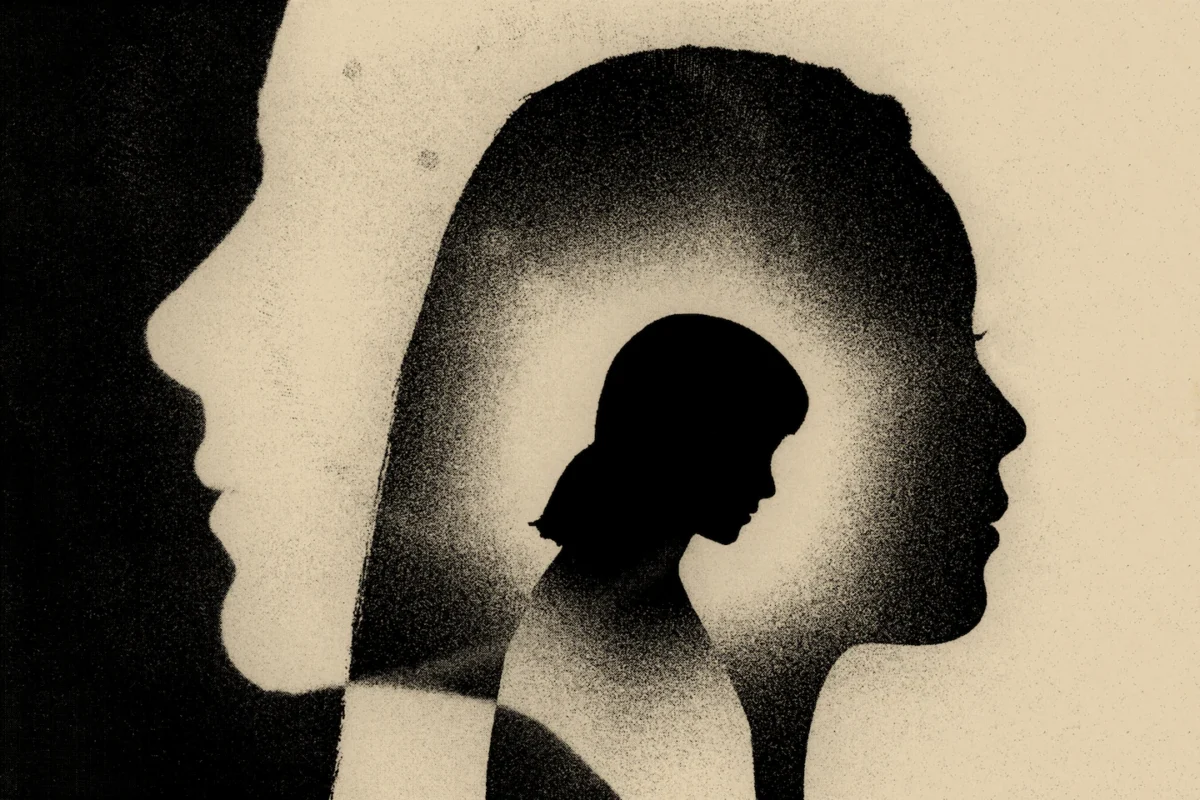
Web image by Medhum.org