A Most Unexpected Path Laid by a Most Unexpected Disease
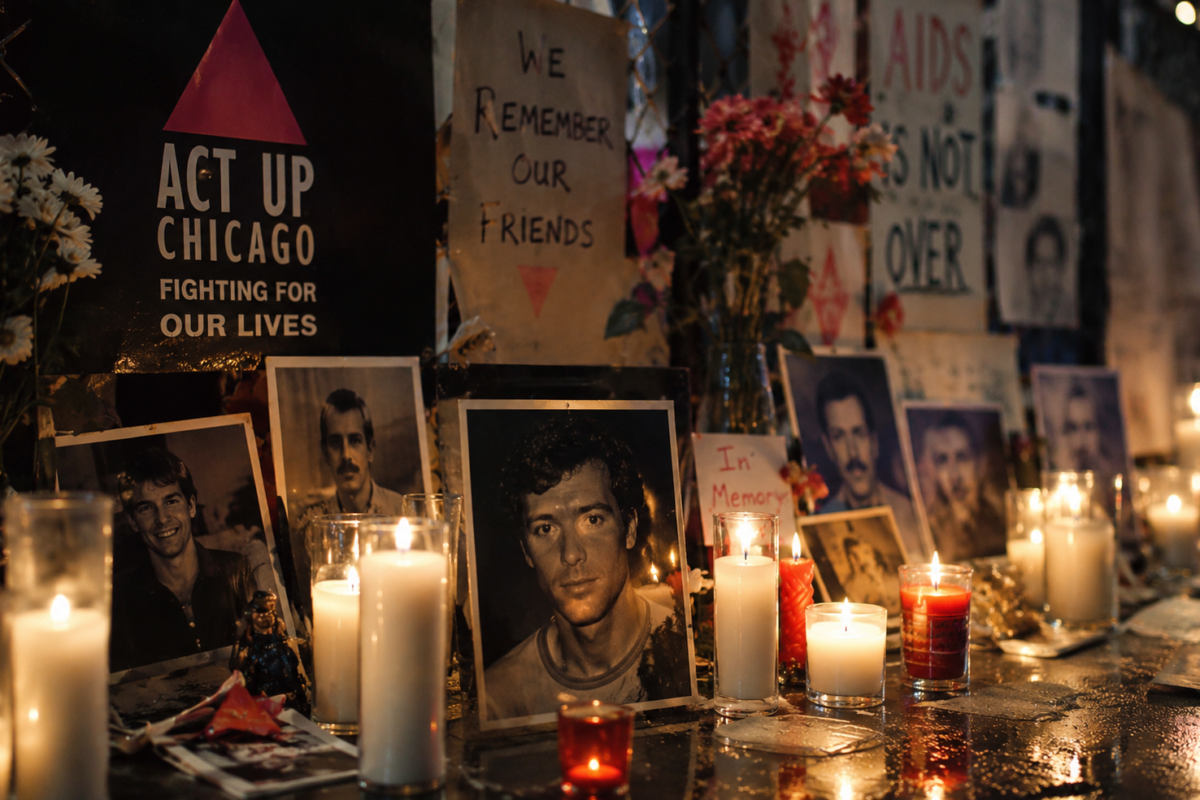
Dr. Ross Slotten chose family medicine to serve patients from cradle to grave. But, as he was entering practice, the AIDS virus was entering the community where his practice was situated, and he found himself serving patients much closer to the grave than the cradle.
In June 1981, a few weeks before I began my internship in family practice [at Saint Joseph Hospital in Chicago], the Center for Disease Control in Atlanta had published the first report of a strange lethal infection among a cohort of gay men in Los Angeles. I had no clue then that the disease would soon kill friends, former lovers, colleagues, and patients; devastate tens of millions of people and their families worldwide; and consume my entire professional life and more than half my chronological one. (p.14)
From both the circumstance of time and place he found himself in, and the sense of necessity and compassion that claimed him, Slotten’s professional trajectory unexpectedly shifted away from traditional family medicine towards specializing in AIDS. His interest in AIDS, however, extended to personal considerations, because as a gay man, he was part of the population at risk, and harbored the same anxieties and fears he saw in his patients and throughout his social circles. His patients were principally gay men because of his geographic location in an established gay community and the resulting referral patterns. The book chronicles both his experiences as a physician taking care of gay men with AIDS, and his experiences as a gay man at risk for AIDS. For Slotten, these experiences were not independent of one another, which makes for rich insights on the complexities of both.
Slotten spent a lot of time at Saint Joseph Hospital because his patients required intense medical support and specialized services. He tells how he and his practice partner pushed for establishing a specialized AIDS unit in the hospital. They bumped up against usual bureaucratic obstacles, plus a few more concerning issues specific to AIDS patients, but they ultimately prevailed. Slotten “was to spend the next fifteen years there, often heartbroken, occasionally inspired.” (p. 109) In contrast to his commitment, he recounts how some specialists he called for help with particular patients refused when told they had AIDS. Those occurrences stuck with him: “I couldn’t forgive those other physicians for abandoning me and my patients in the hours of our greatest need.” (p. 108)
With whatever little time he had left for volunteer and advocacy work, Slotten stayed local. He talks about the volunteer-run health clinics where he worked (e.g., the famed Howard Brown Clinic), and the housing facility he helped set up for homeless people with AIDS. He left protesting at the Food and Drug Administration, the National Institutes of Health, and the annual International AIDS Conference to others while he focused on his patients, his studies, his volunteer work, and his own safety.
The 2020s are approaching when Slotten writes about the preceding three-and-a-half decades. As he finishes the book he is still caring for people with HIV, but the horrible complications of AIDS are now infrequent since the availability of effective medications. His practice had been reliably stable and predictable for some time, a circumstance he could only dream of when he first started. That dream ended abruptly just as the book was released on July 15, 2020: Covid was surging.
Moments of Horror, Relief, Calm, and Then…
Slotten’s perspectives correspond with the trajectory of AIDS over the thirty-five years his memoir spans. Particular periods are discernable, beginning when gay men were presenting with illnesses associated with profound immunodeficiency of unknown cause. Another is the time of peak AIDS death and destruction represented by the moment in 1992 when Slotten hears from the Chicago Board of Health, “that no one had signed more death certificates in Chicago than I had.” (p. 122) The next moment arrives at the turning point when highly active antiretroviral treatment (HAART) became available, transforming HIV/AIDS for him “from a universally fatal disease…into a chronic one like diabetes…it was almost beyond belief.” (p. 186) Then the prolonged period of relative calm when AIDS became controllable—even preventable—with Slotten noting during a moment in 2016 that, “It had been almost a decade since I’d cared for someone with advanced HIV infection, and I hadn’t lost a patient to AIDS since 2004.” (p. 202)
The AIDS epidemic is known for and measured by the number of deaths that occurred. Slotten wants us to remember the misery the disease causes.
For those who didn’t experience that terrible time, or who’ve forgotten how terrible it was, let my chapters serve as a warning to the complacent and the ignorant: untreated HIV is as ruthless as any terrorist and as destructive as a nuclear device. (p. 3)
He drives this point home when he recounts the stories of individual patients tortured by Pneumocystis carinii pneumonia, Kaposi’s sarcoma, cytomegalovirus retinitis, herpes simplex infections, cryptosporidium dysentery, AIDS wasting syndrome, AIDS dementia complex, and progressive multifocal leukoencephalopathy among other medical horrors, and who often suffer many at the same time. And, all the while, he had little to offer but his wits and his compassion.
Both attributes would be called upon again in 2020 as Covid struck. Though those with Covid did not produce nearly the fatality rate of AIDS, not nearly the severe comorbidities of AIDS, not nearly the stigma and prejudice as AIDS, and not any of the governmental insouciance seen with AIDS, it still caused a lot of death, suffering, grief, and misinformation at a time when only supportive care was available. Like AIDS, though, the Covid pandemic was transformed into a manageable syndrome with the availability of an effective vaccine, new antiviral agents, and better clinical management regimens.
Complacency remains a threat to the reemergence of any infectious disease. Indeed, AIDS is reportedly rising in poor and developing countries in 2026 as funding for AIDS treatment and prevention programs has been withdrawn from donor countries, mostly that from the United States. Lessons from Slotten’s book may thus be called upon again.
Notes
Book citation:
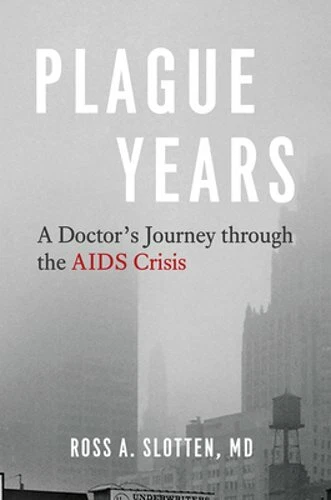
Slotten, Ross A. Plague Years: A Doctor’s Journey through the AIDS Crisis. University of Chicago Press, 2020. 224 pages
Plague Years is a good companion to the documentary film, 5B, which reports on how San Francisco General Hospital coped during the early years of the AIDS epidemic, and Rebecca Makkai’s novel, The Great Believers which features the stories of a group of gay men in Chicago also during the early years of the AIDS epidemic.
Dr. Slotten was a guest on an episode of The Clinic & The Person podcast to discuss his experiences during AIDS epidemic as he reported them in his book, and how well they match up with what we see in 5B and read in The Great Believers.
Web image by Medhum.org