Stone Yard Devotional is Charlotte Wood’s seventh novel; she is widely recognized for her literary artistry. The book was shortlisted for the Booker Prize in 2024 and deemed one of the 10 best books by the New York Times in 2025. Wood’s beautiful novel moves seamlessly and repeatedly from the present to the past and back again. The unnamed narrator is a highly regarded Sydney-based environmental activist whose parents were attentive to their children, and loving and generous to others, but whose values were often at odds with the Catholic dogma that she learned in school. They died over 30 years ago, but the narrator still mourns their loss and regrets her inability to offer them meaningful solace or express her gratitude for their sensitive parenting. In late midlife, she abruptly chooses to leave everything – marriage, job, and community – and move into a small religious outpost in stark rural Australia. There is significant medical illness in the story – older characters die of cancer, younger ones suffer from eating disorders, learning disabilities, or disabling anxiety. But Wood’s attention is not on treatment strategies or clinical outcomes. How people cope with the unpredictability of life is her focus. The mistakes we make, the petty crimes we commit, the unintentional harm and pain we impose on one another; these are the essential ingredients of her powerful narrative. Can we overcome our mistakes, can we be forgiven by those we have harmed; can we offer atonement to those who have hurt us? Is personal history immutable?
The book has a Biblical quality. The story unfolds in present day Australia, but the atmosphere is ancient and premodern. Wood incorporates a frightening plague of mice who infiltrate every element of the women’s home and terrify the nuns. Also, a woman who knew the narrator in high school and who was the victim of a horrifying adolescent gang attack surfaces unexpectedly. She is now a famous nun charged with returning the bones of a murdered sister to the community for burial. Her sudden appearance unsettles everyone. It all sounds like “A Children’s Bible” by Lydia Millet. But it is unmistakably a tale of adults living today in a world that we recognize. These mythical events play out in the setting of grounded people caught up in regular everyday challenges and missteps – miscommunication between couples, adolescent conflicts, failing to realize unintended slights, evenings spent comforting ill friends. The narrator is surrounded by nuns, neighbors, and friends whose activities and conversation are routine. Against this backdrop, her voice sounds timeless and prophetic.
This is an extraordinary book. It is not an easy read but a rewarding one that would be meaningful to any doctor trying to become a better care provider. For example, there is an intense effort underway to incorporate quantitative rigor into medical practice. With that as the point of departure, absent evidence to support one treatment over another, it might seem that restraint would be the best path for a doctor to follow. But illness calls for action. And if doctors are honest, they will acknowledge that errors are made in the course of action that they choose. Patients can be injured and their deepest hopes may be ignored. There is plenty of room for misunderstanding and hurt in both directions — patient to doctor, doctor to patient. How does a thoughtful, mature doctor manage this inescapable burden?
Wood’s novel speaks to doctors who have to address mistakes and conflicts every day in their practice. The setting is religious, but the scope is human. She does not offer an evidence-based one-size-fits-all solution to the chaos of life. The interdependency of people and the connectedness of people and nature are central features of the book and key to its emotional integrity. With that backdrop, she has created a narrative that sensitively details the burden of pain and despair when people cannot get past these challenges. This is balanced by the serenity that is achieved when people honestly confront their mistakes and receive forgiveness for misdeeds. The individual stories in the novel vary and the outcomes differ. The endings are often imperfect and reflect our human limitations. But there are moments of deep connection between characters, a willingness to accept how life played out. The feelings that are created are real and genuine. And they speak to doctors.
This is the season in the Jewish annual calendar when one is commanded to take stock of one’s life and conduct. The underlying theme is atonement, to frankly acknowledge personal flaws and misdeeds and seek forgiveness from that one has hurt. The religious framework is an opportunity to address mistakes of the past and map a path to a healthier more moral future. Ideally, it builds on true memory to create a new future history for our personhood. I would recommend Wood’s book as a human companion text to traditional Jewish prayer books. It is a challenging read, unsettling in its directness, and implacable in its honesty. It is an irreplaceable guide to genuine forgiveness, acceptance, and compassion, whether or not you are a doctor, regardless of your faith.
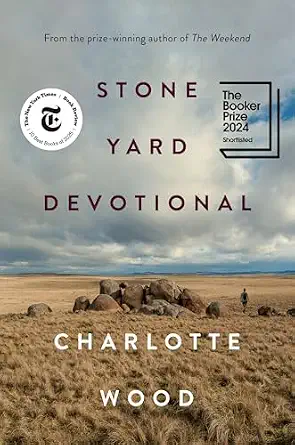
Stone Yard Devotional
Charlotte Wood
Riverhead Books, 2023, 293 pp
Web image generated using the original book cover.