In 2015 this 50-something- year-old psychiatrist graduated from Stony Brook University with a Master of Fine Arts degree in playwriting. For my thesis project, I was of course required to write a play. During my time at Stony Brook, I had also become involved with the medical humanities program at the medical school. At first, I took a course in the department as an elective. The following semester I became a co-teacher in the same course. We were already using plays, e.g., an adaptation of The Death of Ivan Ilyich, so it seemed sensible to fulfil my requirement by creating something to use for didactic purposes.
Before embarking on my project, I reviewed the literature pertaining to the use of plays in medical settings. Friedrich Schiller, the German playwright (who was, incidentally, a physician), laid the groundwork for the use of theater as an educational tool in his 1784 essay “The Stage as a Moral Institution” calling it “a great school of practical wisdom, a guide for civil life, and a key to the mind” (Schiller, page 252). In his view, the theatricalization of the “vices and virtues of men” and of “human woe” not only makes them more palatable, but it also actually teaches the audience to be more empathic.
I found a wide range of milieus in which plays have been used. In 1938, The Federal Theatre Project, a program sponsored by the WPA, produced a play entitled Spirochete with the goal of reducing the spread of syphilis (Flanagan, page 144). More recently, dramatic narratives were used by scientists to provide a forum for learning about human genetics; these have been collected in a volume entitled The Drama of DNA.
A pioneering program that proved inspirational to me is Medical Readers’ Theater, developed in the 1980s at East Carolina University’s Brody School of Medicine. Stories by William Carlos Williams and other doctor writers have been turned into scripts used to encourage dialogue among medical staff, students and the public about a variety of medical issues. These plays are available in anthologies accompanied by discussion questions.
There are also numerous popular plays which are natural fits for teaching because they illustrate points of ethics, diagnosis, doctor-patient relationship, etc. at the same time as just being entertaining. Some of the ones I have used include Wit, A Streetcar Named Desire, and Next to Normal.
While deciding what to do for my thesis project, I was becoming quite taken with Anton Chekhov’s writing through working with Jack Coulehan at Stony Brook. Previously, although I knew of course that Chekhov had a reputation for being one of the great playwrights, I had had the impression that his plays were a bit boring because nothing much happens in them. What can I say? I must just not have seen the right productions.

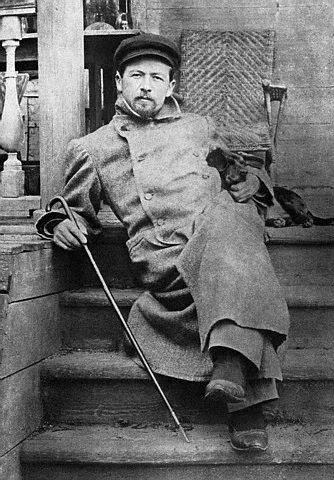
I researched Chekhov’s life, read his short stories, and even plowed through Sakhalin Island, the epidemiological survey he wrote about health conditions in a penal colony. As a result, I became an admirer and gained insight into his method. It does not matter whether there appears to be anything happening or not. The author’s job is to record what he observes. It is not by chance that this is also the job of a physician. One can understand why Chekhov might have wanted to continue to practice medicine even after becoming one of Russia’s most celebrated writers. Chekhov soon became my personal role model as a doctor writer, and it felt like an honor to dedicate my time and energy to his work, and in my own extremely modest way, to add to his dramatic corpus.
Chekhov wrote over 500 short stories, and doctors play a significant role in about 25 of them. I chose “A Nervous Breakdown” (1889) and “A Doctor’s Visit” (1898) “for adaptation. As “A Doctor’s Visit” has fewer characters and is the shorter of the two that is the one I use to teach. Some students may even have read the original story already because it is so well known.
The plot may be summarized as follows: A doctor has been summoned away from the city to see the daughter of a factory owner, but for some reason he sends his assistant instead. (Perhaps he just did not want to go out to the boondocks.) The assistant doctor arrives at the house and examines the young lady. After not finding anything wrong, he concludes that he’s been called for nothing. The patient’s mother, who is depressed and overwhelmed, implores him to spend the night instead of going home to his family. The doctor is not in a position to refuse, but he feels as if his time is being wasted and he is annoyed.
However, in the short time he is in the factory town, the doctor gets a sense of what it is like in live in such a place. He sees how unhealthy the environment is for the workers. He sees how, despite having lavished a fortune on expensive furnishings, the inhabitants of the house are miserable. Adding insult to injury, a servant repeatedly contradicts him and gets on his nerves.
In spite of the prejudices he has brought with him from the city, the totality of his experience makes an impression on this doctor. The next morning, he meets with the patient again. This time, he recognizes that she is a sensitive and intelligent young lady, and he now has empathy for what she must be going through. There is a moment of understanding between them. Although it does not perhaps appear as if the doctor has applied any treatment, the patient responds and shows a sense of hope. The doctor has also changed as a result of this experience. He leaves the house and heads home in a good mood.
Like general practitioners today, general practitioners in 19th-century Russia undoubtedly ended up doing a good bit of psychiatry. Although Chekhov and Freud were contemporaries, there seems to be no evidence that Chekhov was aware of Freud’s “talking cure. “ But even if not, and even if the doctor in “A Doctor’s Visit” does not think he has done anything, the doctor has in fact unwittingly administered a brief psychotherapy session. The powerful results he obtains with such simple means remind me of some of my own experiences as a psychiatrist. Sometimes when one uses one’s psychoanalytic theories to make what one thinks are brilliant interpretations, they fall on deaf ears. Just being present and listening often produces the best outcomes.
The greatest technical challenge this playwright confronted in dramatizing “A Doctor’s Visit” was figuring what to do about the doctor’s internal thoughts. There is plenty of spoken dialogue in Chekhov’s story, and I used much of it practically verbatim. But how to dramatize one’s inner dialogue? It would be cumbersome to have a narrator describe it, and unnatural to have the doctor verbalize it. My solution was to create a brand-new character, a young apprentice, someone the doctor uses to bounce ideas off. I hope audiences and readers feel this was a reasonable compromise on my part.
My adaptations of Chekhov’s two stories made their debut in 2015. Since then, “A Doctor’s Visit” has been used to teach students at several medical schools: Stony Brook, Drexel, New York University, Boston University, Cleveland Clinic, and the University of Pennsylvania. At all but one of these I introduced the play in person, read the stage directions aloud, and led the discussion. The text of the play is included in an appendix to this article in the hope that other schools will take it up. And I am still available to read stage directions!
References:
Chekhov, Anton: “A Doctor’s Visit.” Translated by Constance Garnett. https://www.ibiblio.org/eldritch/ac/jr/193.h
Coulehan, Jack. “Cold Eye, Warm Heart: Medicine and Anton Chekhov.” MedHum, October 2, 2025 Flanagan, Hallie. 1940, reprinted 1985. Arena: The Story of the Federal Theatre. New York: Limelight Editions
Rothenberg, Karen H. and Bush, Lynn Wein. 2014. The Drama of DNA. New York: Oxford University Press
Savitt, Todd L. (ed.) 2002. Medical Readers’ Theater: A Guide and Scripts. Iowa City: University of Iowa Press
Schiller, Friedrich. 1784. “The Stage as a Moral Institution.” In Theatre/Theory/Theatre, 250-254. New York: Applause
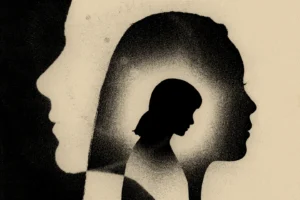
Web image created based on this vintage illustration from WikiCommons
A Doctor’s Visit: An Adaptation of a Short Story by Chekhov
by Guy Fredrick Glass
Downloads of this play may be distributed and performed for educational purposes only, with permission of the author. Dr Glass may be contacted at gf***@*ol.com