The Guts of it All
David Hsu sits down to talk with Medhum editor Dr. Steven Field. Steve is a gastroenterologist, though retired from clinical practice. He is Clinical Assistant Professor of Medicine in the New York University School of Medicine. He has also received certification in Bioethics and Medical Humanities, as well as Psychodynamic Psychotherapy of Adults.
DAVID HSU: Why do you think medical humanities is important in today’s world?

STEVEN FIELD: I think it’s important because it’s a way of getting back to the heart and soul of clinical medicine, or at least, I hope it is. I was in practice for 35 years, and I think that medicine has moved towards a different concept than the concept that I grew up in professionally. I like the idea of well-rounded physicians. I think people should know things other than just medicine. Reading novels gives you an appreciation for the way that people interact, not necessarily just in medical illness, but also outside of illness, which then you can extrapolate back [from].
But I admit I’m biased. I was a liberal arts major in college. I started in English, and my degree is in history. What was your area?
I did a double major in biology and history. Most of my classes were 20th Century American history.
My senior essay was on Puritan and colonial town planning theorems in New England and the middle Atlantic states, nothing I’ve used ever since. And my junior essay was on witchcraft.
Witchcraft is a little bit closer to medicine.
True. I actually was looking at the sociopolitical ramifications of witchcraft in Tudor-Stuart England and France under Richelieu. So, while it wasn’t wars and treaties history, more social/cultural history, it was history nonetheless.
I come from that liberal arts background, so I have a leaning towards medical humanities. I think it’s really helpful to ground people who are in the field, and I think it’s an often incredibly helpful way to relate to patients on so many levels. You might not be amazed, but many people would be, to know how many times the doctor-patient relationship is either forged or strengthened over a shared interest, literary or otherwise. I don’t mean sharing at the same time, but something that somebody else has read, or a movie, or a play you’ve seen. The reason I think medical humanities has assumed more importance is because the period of time that doctors have to spend with patients in the encounter has gotten smaller and smaller. There’s this thing that in some offices a new patient visit should take 20 minutes and follow-ups should take seven minutes. I retired from practice in 2011, and I would never be able to function under this system now, because I’m a schmoozer, you know? I like to talk to patients.
And you’re a gastroenterologist, is that right?
I am a gastroenterologist, although I had a large proportion of my practice in general internal medicine. Along the way, I also got a certificate in psychodynamic psychotherapy, which I found very useful, not only in the practice of medicine — mind and body are linked, of course — but in two other places as well. I had a small psychotherapy practice, in addition to my medical practice, so it clearly helped there. And I work in clinical ethics now, and understanding family dynamics is really helpful when you are dealing with patients and families in conflict. I think that psychiatry especially — not so much psychopharmacology, but psychotherapy — is kind of the closest to medical humanities, in some ways.
That’s interesting. I read your bio and it talked about dynamic psychotherapy, but I didn’t know what that meant. I didn’t realize it refers to inter-family dynamics.
Psychodynamic refers to treatment basically anchored in Freudian theory. So it’s not cognitive behavioral therapy. It’s the old standard, you know? You talk about childhood, ego, super ego, all that stuff.
So you see that medical appointments are getting shorter and shorter, and there’s more and more use of technology, and like you’ve mentioned, the humanities could be a bit of a buffer against that. It would help us navigate that world. Can you be a bit more specific on how you see that relationship unfolding?
Just to be clear, it’s not really a buffer against technology per se, but rather, against the depersonalization of medicine that can result from increased technology and decreased time. I’ll tell you the truth. It’s tough for me to answer that question, because I’ve never functioned in this 20-minute visit environment, right? When I was last in practice, a new patient got an hour and a follow-up got a half an hour. That’s much harder to do today. So there was time to talk to them and sort of develop the relationship – the medical side as well as the interpersonal side.
I think that it’s a good question. I think medical humanities could have two different functions. It hopefully heightens physician sensitivity to the human condition, to what patients are feeling and going through. In addition, I believe that for many physicians it acts as a counterweight to the immersion in medicine and illness, and as a source of personal fulfillment. Of course, that second sense may not be true for everyone; people find fulfillment in life in many different ways.
Let’s talk a bit more about the tie-in with psychiatry because I’m really curious about this. You reviewed the book The Third Reich of Dreams. How do dreams and the subconscious relate to medicine?
Freudian theory has gotten a bit of a bad name over the years, and psychiatry has moved very much to psychopharmacology. But psychiatrists classically loved to analyze dreams, because a dream brings in not only what the immediate concerns are, but also all the things that you draw on in your background. So it’s a very interesting way to approach things. For some people. Others don’t dream, or they dream, but they don’t remember them.
And it’s not only dreams. I noticed many times in patient interactions in my medical practice, that people re-enact things from their childhood or early adulthood. Their mother didn’t love them, so they choose somebody who reminds them of their mother, because they think they’re going to fix it this time. That’s almost a cliche. But that sort of stuff happens a lot, and I think that’s really interesting.
I had sort of a subspecialty in inflammatory bowel disease, so a lot of Crohn’s and ulcerative colitis patients. And I had one young woman, not so young actually, who had very severe Crohn’s, and she wasn’t getting that much better. And I talked to her about putting her in the hospital and putting her on TPN (total parenteral nutrition) because she was losing so much weight, and she didn’t want to do that. And she said “I don’t want to go to the hospital. I’ll try, Dr Field. I’ll really try, because I’m telling you, I really don’t want to gain any more weight.” And then she said “I mean, I don’t want to lose any more weight.” And I just said, ”Well, that’s an interesting slip, right? What do you think that’s about?” And she paused, then she burst into tears. And then I got the whole story about her difficult relationship with her mother, and how her mother was always making nasty comments about her weight. This was all coming out; there was a whole huge story behind it. And there’s stories behind lots of people’s stuff, and I’m not saying her Crohn’s was due to that, not at all, but there are lots of patients who have this kind of thing in their background. You know, life story and narrative, and so that’s what I think Medical Humanities is about, the human narrative behind the patient and their illness. I think having some knowledge and experience, some background, that isn’t just medical but also is humanities-oriented can sometimes give you common ground with patients, or even just make you curious about them. All it took was saying, “that’s an interesting slip. What do you think about that?” And it was a whole other side of this patient. Medicine is about people, and people are not just their disease. They’re people with a disease. Sometimes you have to have that sort of global look. And I think the interaction with the humanities is helpful in that regard.
What’s your Gestalt sense of the relationship between our mental well-being and physical illness?
I have always felt that the two things influence each other, and it’s not necessarily a sharp line between them. I would certainly not go so far as to say that my patient’s experience with her mother caused her Crohn’s disease, but I think psychological states can certainly exacerbate symptoms. I mean, the gut, specifically, has its own extensive immune system. It has its own nervous system, responsive to inputs from the central nervous system, and the enteric nervous and immune systems are interrelated. And much of that has been well worked out, there’s this whole field of neurogastroenterology that deals with this.
So I think that’s recognized, clearly, that one’s psychological state can influence illness and sometimes worsen symptomatology. Many times I’ve seen “intractable” symptoms abate when a patient retires from a stressful job, for example. So I think stress has a very significant role in the production of symptomatology and perhaps in the pathophysiology, actually, in certain cases.
How about today? In 2025, it seems like the world of medicine is facing a lot of stress. There’s a lot of vaccine skepticism. People are antagonistic towards public health. COVID certainly didn’t help things. How do you see medical humanities being part of that landscape?
Well, I imagine that landscape is prominent in the United States in large part related to political developments.
I guess I’m influenced by my subscriptions to the New York Times, but Canada is the same. I mean, I feel like before COVID there were a few people that were skeptical of vaccines, but now everyone seems entitled to have an opinion about it and voice it readily. I’ve worked with mostly Chinese patients. I hear this from them all the time, but they’re generally a little bit more “toe the line” regarding what their government says they should do. But I think now people are more emboldened with some of these ideas.
One thing about the United States is that, as opposed to most of the northern European countries and Canada, the US has a very strong libertarian streak. Individuals. “Don’t tell me what to do.” We rebelled against England, settled the frontier, dispossessing everybody who was there in the process. So there’s this real idea of the right to be left alone. So the question is: does that feed the problem?
The reason I have a little question with the role of the humanities is when you look at people who are involved in medical humanities — and this may only be my impression — I think they tend to sort of cluster closer to the left. And more of them are the people who will take vaccines and things like that. But I don’t know that. I wish there were a larger role for medical humanities in smoothing over these political differences and polarization. I think it would be nice if there were. For example, people talk about book clubs and reading groups. I’m a big believer in them, and they’re very popular, but most of the time, book clubs are self-assorting entities, right? Go with people in your club. The people in your reading group are often people who probably feel somewhat the way you do. It would be great to have reading groups with multiple viewpoints represented, as long as their discussions don’t devolve into chaos. These days, that’s a real risk. A big problem in America is that we’re becoming more and more polarized.
The trick is to bridge that divide somehow.
A big problem is that in so many cases, there is no trust. When everyone has their own facts, it’s the end of the idea of an absolute truth. Each side has its own truth. You have your facts; I have my facts.
I guess, as a historian, we are taught gradually that truth is kind of like that, right? One thing I remember learning in university is this idea that facts can be a subjective experience for people.
That’s true. The subjective interpretation will vary and can color the way history is written. And history is written by the victors, right? But facts are facts.
Given that that’s the landscape, what would you like to see MedHum evolve into over time?
Well, It was set up originally as a Medical Humanities Resource. That is, it originally came out of the Literature, Arts and Medicine database, right? So I still like to look at it as a resource. But I’d also like it to be a place where people go for well-written and insightful writing, commenting on aspects of the interface of health, wellness, current events, and literature and the arts. I think it should exist, as the mission statement indicates, at the nexus of medicine and the wider society, and comment on the interactions there. MedHum is brand new, so you have to see how it develops. I’d like it to be a source of good writing, good insightful and perhaps incisive commentary.
I was going to ask you about what you thought about the relationship of technology in medicine. A lot of the time when people talk about humanities and the liberal arts education — like history and English majors — one thing they don’t spend a lot of time on is cutting edge technology. A lot of these studies go back to things that occurred decades ago. But medical humanities is a little bit different, because it wrestles with these things that are happening right now. There’s a certain degree of urgency. And in medicine, new things are coming out every couple of years. As soon as AI comes out, we adopt it for some medical purpose. So we’re constantly trying to push that boundary. Where do you see that going as a person with a humanities background?
One of the things about all the technology is it’s very important to ask the questions about what you’re going to do with the technology. Where it’s going to go, how we can protect things like privacy and vulnerable people. I mean, bioethics has a lot to say about technology like AI and big data and privacy. It also has a huge amount to say about other technologies, like reproductive technologies, transplantation, and the like. But I think you’re talking about two different things. The time-honored majors in university, English and history, the number of people who are electing to major in these is dropping, while the number of people majoring in the STEM fields is rising. So that’s a process that’s happening, and it’s going to continue to happen, just because that’s where things are going. I think that a role for medical humanities in that mix is that of humanizing the processes which technology facilitates and also asking important questions about technology. In terms of AI, since you brought it up, what does it mean to be human? As the machines get better and better, and given that we often use cognition as an indicator of life — ‘sentient beings” — where then is the line? When you can get psychotherapy from a chat bot what does it actually say about interpersonal interaction, what does it actually mean to interact as a human being? Where does this logically end up? No one knows. So I think thinking and writing from a humanities point of view about technology brings a new perspective to the subject. It may be the best way to contextualize our progress and at the same time create guardrails where needed. Because they will be needed.
And there’s just been so much in the news about the use of AI to write fiction. To write college essays. When a chatbot is creating, can it be said to have an imagination? To employ metaphor, or allegory, or irony? And ultimately, how will technology limit our adeptness with basic human interaction? There’s lots of dystopian fiction written about this kind of thing.
If AI continues to evolve and people start to use it as doctors, where do you see a medical encounter in the future? What does it turn into? What does it look like?
There are studies that show that AI is comparable to or better than most radiologists looking for breast lesions. And there’s lots and lots of ways that AI can help in medicine, including increasing diagnostic accuracy across a number of areas, screening potential drug candidates, personalizing treatment plans, and the like. Interestingly, there is a suggestion that the use of AI-assisted technology may lead to a subtle loss of the physician’s native ability to evaluate, what is referred to as “de-skilling.” An interesting and sobering thought. Overall, though, I think AI can be a huge help in medicine, with its potential only beginning to be appreciated. But I would hope that AI would never replace doctors, because AI can’t empathize, can’t engage in a meaningful relationship with a patient, even if it can create the words. I, for one, would always know that it was a machine interacting with me, and that would color my response.
For diagnostic purposes, it will weigh the relative possibilities, but some of that diagnostic process — especially in terms of general medicine — is intuition. There are some areas where AI is less helpful. AI can screen data and suggest diagnoses and investigations, but sometimes patients would come in, and the doctor will think “something just doesn’t smell right here. There’s something not hanging together about this” or “this is somebody who doesn’t normally complain, and now they’re complaining, and that’s different. What’s going on here now?” AI may, may evolve to be able to catch up to that too, because my understanding is that it’s just becoming better and better. But it’s certainly a useful adjunct. I know in our medical school curriculum there’s a whole session on how to engage with AI and how to use it. And I think that’s good. It’s a tool, and it’s really helpful.
One more change of gears. How did you go from the liberal arts background into medical school? Was there a transition, or was that something you always wanted to do? Or was the liberal arts a bit of a detour? How did that evolve?
I always wanted to be a doctor, but I also always knew that I wasn’t going to spend four years at a college that was very strong in liberal arts and spend it doing biology or some other concentration in the sciences. There were just too many other things that I liked. I had a bunch of AP credits coming out of high school, so I didn’t have to take many science courses — and I didn’t — but I took enough, and the rest of the time it was English, history and other humanities courses. I thought that was important before I went to medical school. And I generally think that it’s important.
Where did you get that idea as a 17 or 18-year-old?
Probably simply from the fact that I was too interested in so many things. I was fascinated by medicine, but I always read a lot, and I was much more attracted to humanities in college, knowing that I was going to go to medical school afterwards. I knew I’d be spending the rest of my professional life in medicine, so I wanted to explore non-medical areas in college.
When you went into medicine, did you think that you were leaving the humanities part behind, or did you always think the two would stay entwined?
I always thought the two would stay entwined. At one point I actually thought of doing psychiatry — as I said earlier, that always seemed to me to be the specialty most intertwined with the humanities — but I decided not to. But no, I didn’t leave the humanities behind.
One thing I’ve always appreciated about the United States is their undergraduate education is much more permissive of people pursuing other things and then going to medical school later. In other countries, like in Canada, undergraduate learning is very much more pre-defined. If you want to become a doctor, you have to do life science, and life science leads into medicine. It’s technically not written anywhere, but everyone does it this way, and I think you miss out on a lot of stuff that you could learn that might help you later, but in a more abstract way.
I think a four-year general undergraduate curriculum can certainly broaden your horizons. Medical school was four years of really hard work; College was the last time, at least for the next four years, that I could do something else in depth with the other side of my brain.
Or even if we just say those four years exist for themselves. It’s a great four years. It doesn’t matter if it affects you later, necessarily. We could die tomorrow. You enjoyed your college years. Let’s circle back. Why is medical humanities important in today’s world?
I feel like medical humanities is important because I just think it makes us broader and deeper and hopefully more empathic human beings. And that’s always a good thing, and I think patients benefit from that. I hear a lot of complaints from family and friends about medical care these days (because let’s face it, I’m at the age where my contemporaries all talk about their medical care) and often their biggest complaint is that the doctor’s visit was very short or they felt rushed. Unfortunately, a number of people are unhappy with the nature of doctor-patient interactions these days. But I don’t know that the humanities alone are going to make that better. So much of it is driven by insurance companies, reimbursements, and documentation needs — all things that are beyond our control.
Thank you very much for your time.
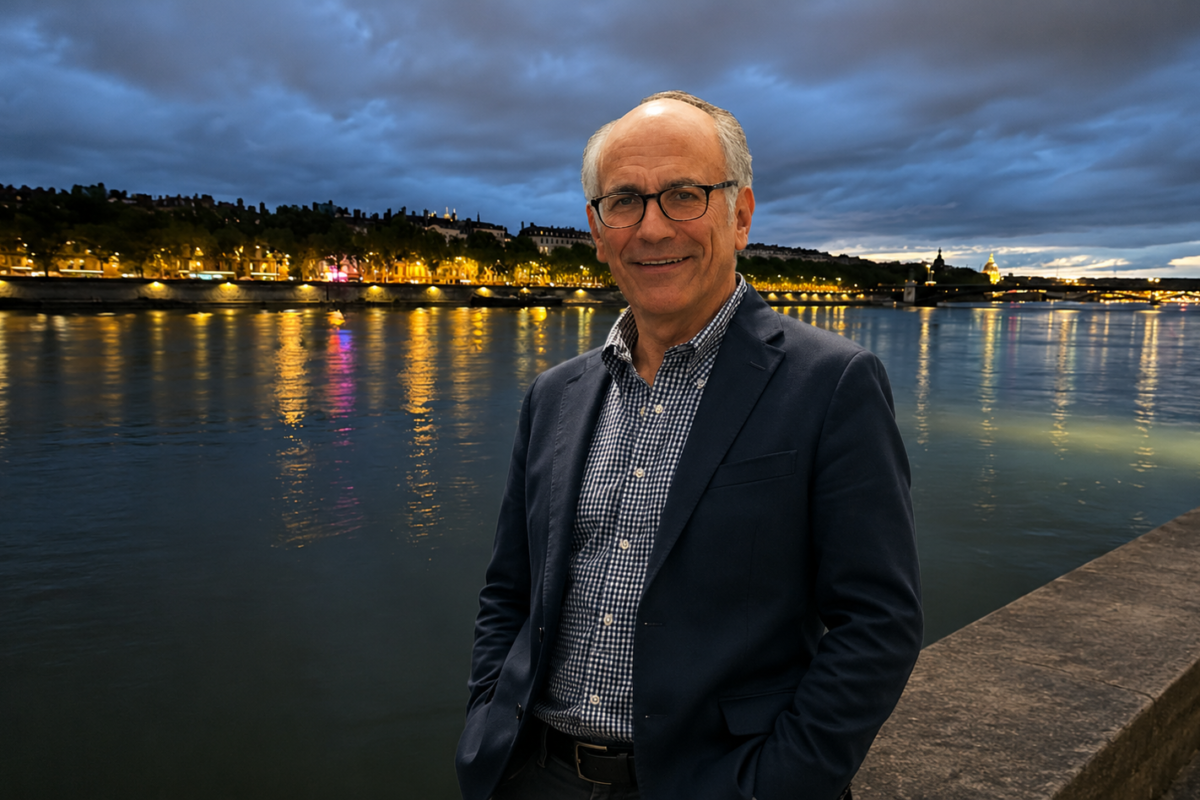
Web photo by Medhum.