Feeling is Believing
Attending plays is not always just a passive experience. Through various means playwrights, producers, composers, choreographers, set designers, and others have available to them, they can make plays immersive and interactive for audiences. A good example, among many, is Florian Zeller’s play, The Father.
The Father is the story of an older man with Alzheimer’s disease (André) and his progression through first living on his own, then living with his daughter (Anne), and finally living in a nursing home. Or, is it? It’s hard to tell, and that is the intention of the playwright, Florian Zeller, who in a 2021 interview with Forbes Magazine,* said his aim was,
to tell the story from the inside and put the audience in a unique position as though they were going through a labyrinth—questioning everything they’re seeing. It also was a way for me to play with the idea of disorientation because I not only wanted The Father to be a story but also an experience. The experience being what it’s like to lose everything, including your own bearings as a viewer and to be uncertain of what is and isn’t real. It was a way for the audience to experience a slice of dementia.
The director, Doug Hughes, creates the audience experience through an interplay among set designs, lighting effects, repeated scene sequences, and time loops as circumstances for various behaviors like memory loss, paranoia, anger, and lasciviousness. All the scenes take place in one room that serves at different times as André’s flat, Anne’s flat, and André’s nursing home room. The furnishings of the room change based on the supposed setting, but the walls are exactly the same for all of them. In different scenes, André is not always sure where he is, and neither is the audience.
Early in the play, André hears Anne tell him she’s relocating from Paris to London with her lover, but she is present to him in most of the scenes thereafter and until the end of the play when he’s told by a nurse that Anne had moved to London some time ago. Had she really left Paris and was never actually there in all those other scenes? He wonders and so does the audience. In other scenes, the way characters from the past and present enter and exit distorts time for André, and so while audience members know the linear trajectory of the disease course, they can’t be sure of where they are in that course during a given scene. With the last scene taking place in André’s nursing home room with the same walls seen in his flat and Anne’s flat, the audience can’t be faulted for wondering whether all that came before was just one of André’s hallucinations.
The Disorienting Is Clarifying
If the play had been staged as the customary audience view of outside looking in, the audience would have merely witnessed the familiar manifestations of Alzheimer’s disease and a familiar progression of events. This view would have afforded a new appreciation for the trauma it causes to those who are not closely acquainted with the symptoms of Alzheimer’s, while those who are familiar with them could possibly achieve a measure of catharsis. Zeller endeavors to do much more by offering a view of Alzheimer’s from the inside looking out and a means to grasp the actual experience of it. He is successful when audience members find themselves working as hard as André is to discern fact from fiction, past from present, and here from there.

This can be no easy feat for the stage, and no wonder then that the Broadway production team enlisted an “illusion consultant” (Jim Steinmeyer) and a medical advisor (Dr. Randi Diamond). The intimate experiences the actor playing André (Frank Langella) and the director (Doug Hughes) have had with Alzheimer’s disease through family members no doubt contributed to the production’s authenticity as well.
Zeller doesn’t leave the audience members defenseless in their efforts to orient themselves. He associates André’s grasp of his own situation with the whereabouts of his watch: “I need to know exactly where I am during the day. I’ve always had this watch, you know. If I were to lose it, I’d never recover.” As André’s dementia progresses and his powers of perception weaken, we see fewer objects in Anne’s flat. In the end, Zeller is hoping that confusing and disorienting the audience members will clarify the dementia experience for them.
Notes:
*Dawson A. Florian Zeller takes viewers into the labyrinth of dementia with The Father. Forbes. March 30, 2021.
This essay is based on a live performance of The Father presented by the Manhattan Theater Club at the Samuel J. Friedman Theater in New York City that ran between April and June of 2016.
Translated from French by Christopher Hampton.
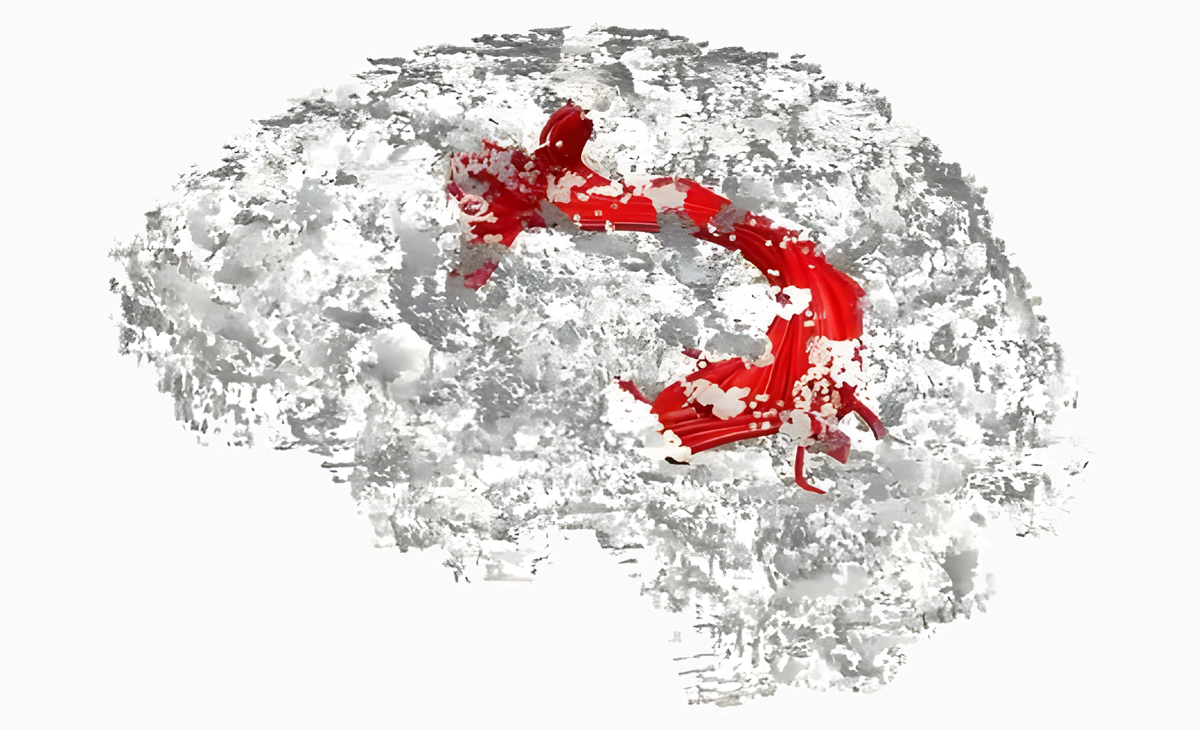
Brain photo: Processing language, left brain hemisphere (sagittal view). Stephanie Forkel, NatBrainLab. Source: Wellcome Collection
License: Attribution 4.0 International (CC BY 4.0)
Watch photo from Wikicommons images and licensed under the Creative Commons Attribution-Share Alike 3.0 Unported license.